Summarize this post with:
Residents of the state of California, in the United States, have access to a legal procedure that gives them greater control over their personal information. It is the Delete Act.
This privacy law has important implications for these consumers’ rights over their data and for the companies that trade in it.
What is the Delete Act?
The Delete Act is a California privacy law that allows consumers in this state to protect the privacy of their personal data.
Through this law, people who live or have recently lived in California have the opportunity to request the deletion of their private information from the records of the data brokers that trade in their data.
When did the Delete Act take effect?
The Delete Act took effect on January 1, 2026, the day California residents were able to start submitting requests to delete their personal data.
That said, it was starting August 1 of the same year that mandatory compliance with this law by data brokers came into force.
What does the Delete Act establish regarding user data?
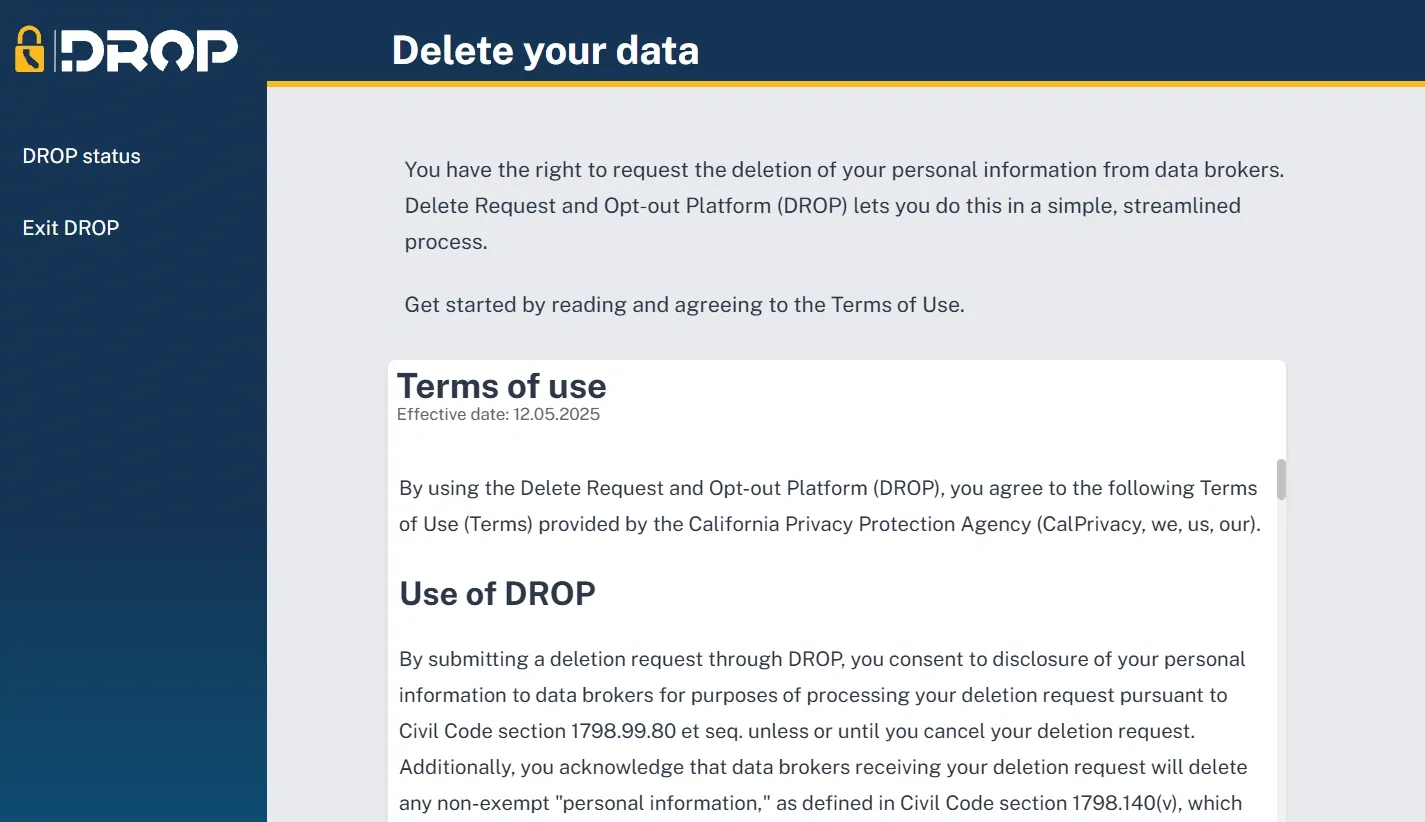
The Delete Act establishes the creation of a centralized system that helps California residents manage the deletion of their personal data from data broker records if they so wish.
To fulfill this mandate, the California Privacy Protection Agency (CPPA) created the Delete Request and Opt-out Platform (DROP), a free and open tool that helps Californians channel their information deletion requests.
What exceptions does the Delete Act include?
The California Consumer Privacy Act (CCPA) includes exceptions to Californians’ right to delete their personal data that apply to what the Delete Act establishes. The most important exceptions are:
- Legal obligations: a data broker is entitled to reject a deletion request if it needs the information to meet legal commitments.
- Historical or scientific research: if the data is used in a historical study or one of public interest, it may not be deleted.
- Legitimate internal use: if the information is used in tasks and procedures that are reasonable from the consumer’s perspective, the company may reject the deletion request.
- Security and integrity: a data broker is likely to keep some user data that allows it to detect or prevent security incidents.
A data broker may also decline to proceed with a deletion request from a California consumer if the company needs the information to complete a potential transaction with that consumer.

Take back control of your online reputation
We can review your case and offer a personalized solution to take back control of what’s said about you or your business online.
Get a quote in less than 24 hours
Implications of the Delete Act for data brokers
The Delete Act sets out several important points that data brokers must comply with to avoid penalties. For these companies, the most notable points of this law are:
- Registration with the CPPA: since 2024, data brokers that work with California consumer data must register with this agency in order to operate legally.
- Periodic audits: starting in January 2028, data brokers must undergo audits every 3 years by independent institutions, and these audits must be shared with the CPPA if the agency so decides.
- Compliance reports: data brokers must share with the CPPA the information related to consumers’ deletion requests.
- Recurring deletion of private data: after receiving a user’s initial request, these companies are required to delete their information periodically, at intervals of no more than 45 days.

Considering these items, it is fair to say that this privacy law works as a tool that allows California authorities to monitor data brokers and the way they use local residents’ information.
What happens if a data broker does not comply with this law?
A data broker will receive a fine of 200 USD for each day that goes by without it registering with the CPAA.
That said, a penalty of this kind also applies for each day that a deletion request is not properly processed by these companies. If an organization has 2 or more unreviewed requests, each one represents a separate penalty.
What the Delete Act means for California consumers
The Delete Act is a significant measure in the relationship between California consumers and their personal information for the following reasons:
- Greater control over their information: first, the Delete Act gives people who live in California a wider margin of action over their personal information.
- Centralized mechanism: DROP allows Californians to complete a single procedure to request the deletion of their information from hundreds of data brokers.
- Zero-cost solution: California residents do not need to pay any entity to submit a request through DROP.
- Blocking of future sales: because data brokers are required to continuously delete newly collected data, consumers prevent their information from being sold to unknown organizations.
Lastly, the Delete Act can serve as a way to educate society as a whole about people’s rights over their information, a situation that tends to encourage the development of similar solutions.
Final thoughts on the California Delete Act
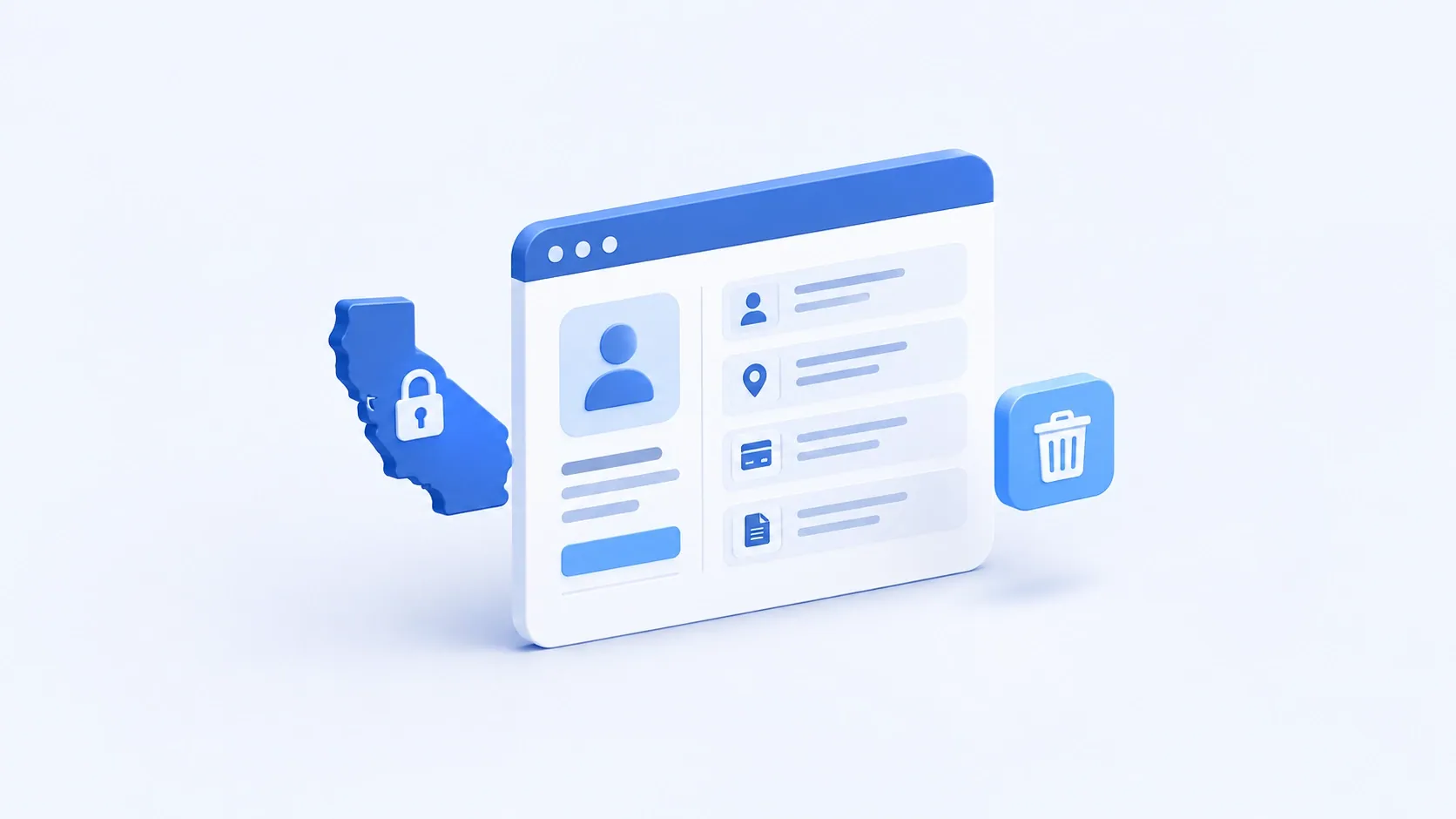
The Delete Act is a legal tool that favors the data privacy of people in California.
Although this law applies only to a specific region of the United States, that does not change the fact that it is a significant global precedent capable of influencing other legislation in the medium to long term.
That said, for people who cannot use this procedure because they live outside California, a possible alternative is to turn to the solutions developed by a company specialized in content removal.
At Media Removal we have methods for contacting and negotiating with data brokers and similar institutions to request the deletion of our clients’ information and, in that way, help them manage their data better.
You can schedule a meeting with us if you want to learn more about how data brokers handle your personal data and the methods available for you to have greater control over it.
 Subscribe to our newsletter
Reputation insights and industry news from the Media Removal team, straight to your inbox.
No spam. Unsubscribe anytime.