Summarize this post with:
Wikipedia tends to be one of the first results Google shows users after a search.
Since this platform usually ranks high in search engines and is seen as a sign of prestige and recognition, many companies or public figures are likely interested in having their own page on this website.
Now, when it comes to understanding how to create a Wikipedia page, there are several keys and procedures that can be useful for interested institutions and individuals.
What is a Wikipedia page?
A Wikipedia page is any entry hosted on this platform with encyclopedic information, community guidelines, or a conversation between users about specific content.
On the Wikipedia website, there are four types of pages that can help explain the structure of the site:
- Article page: a page with encyclopedic content that explains a specific topic, concept, person, or event.
- Talk page: a space Wikipedia editors use to propose content improvements.
- User page: the dedicated space for each editor registered on Wikipedia.
- Portals: special pages that bring together a large amount of information on a particular area of knowledge.
All of these Wikipedia pages, with the exception of the third, tend to appear in Google search results.
Which type of Wikipedia page is most useful for my online reputation?
Generally, the article page is the type of Wikipedia content that does the most to boost the reputation of a public figure or institution online.
A good Wikipedia article typically contains relevant, official information about a specific topic, and that information tends to be backed by reliable sources that make the article legitimate and compliant with the encyclopedia’s guidelines.
What rules does Wikipedia have for creating new articles?
On its help page for article editors, Wikipedia lays out guidelines that editors must follow when creating a new page on the website.
Briefly, here are the most important guidelines Wikipedia sets out for creating new articles:
- Content must be written from a neutral point of view.
- All key information must include references to external, reputable sources so users can verify it is accurate.
- The editor should not have a personal or professional relationship with the article’s subject.
- The subject must have public relevance and media coverage.
If new content doesn’t meet these requirements, a Wikipedia editor is likely to review it and remove it, considering that it fails to meet the page’s minimum quality, notability, and verifiability standards.
Step by step: how to create a new Wikipedia page
While the platform’s guidelines set certain content limits, the actual process of how to create a new Wikipedia page isn’t usually complicated.
Below, we share a short list of the steps you need to follow to successfully create a Wikipedia article:
- First, you need to log into your Wikipedia account. If you don’t have an account, you’ll need to create one before you can write.
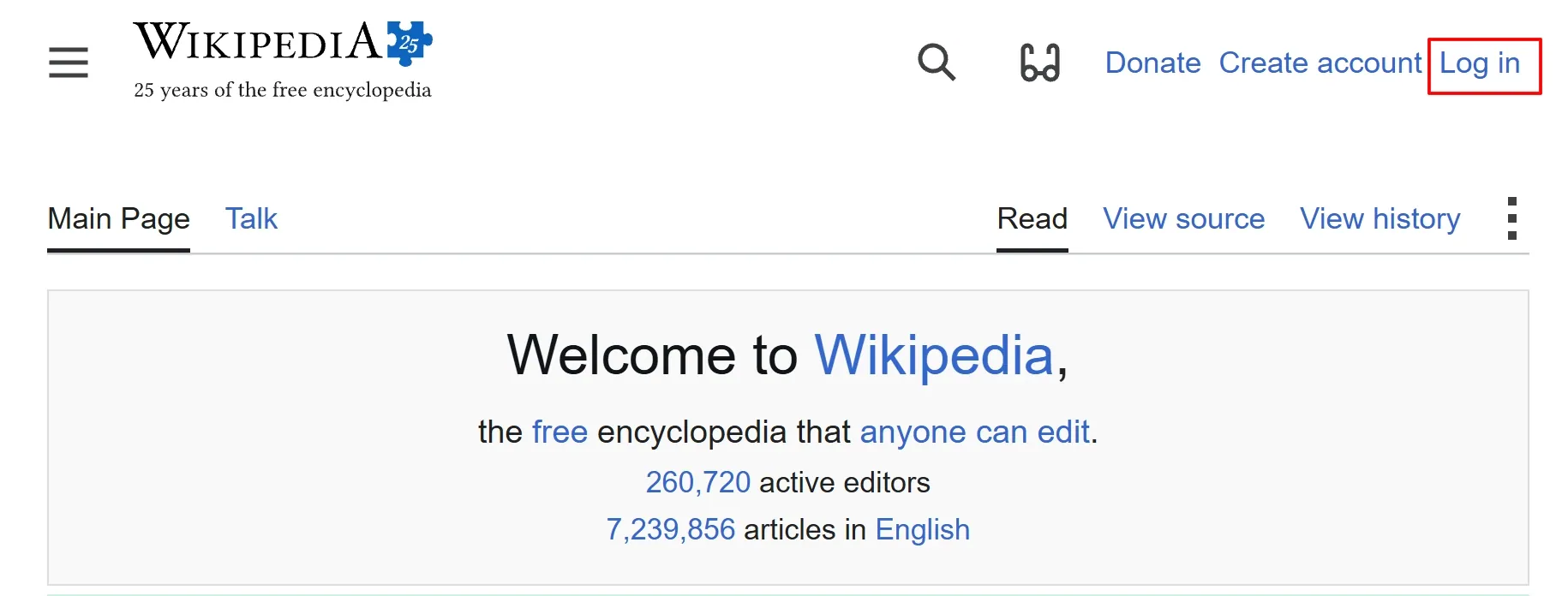
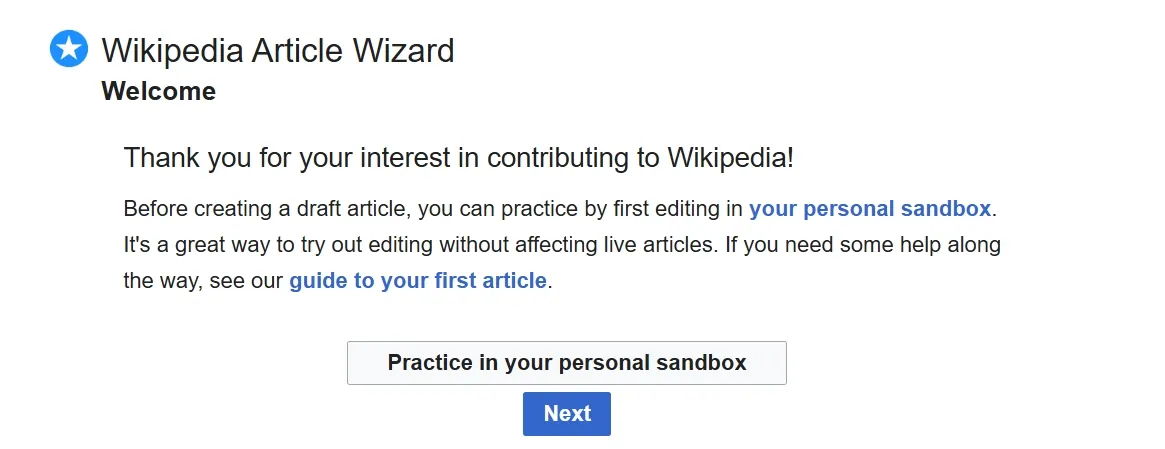
- After logging into your profile, go to Wikipedia’s article creation wizard and click “Next”.
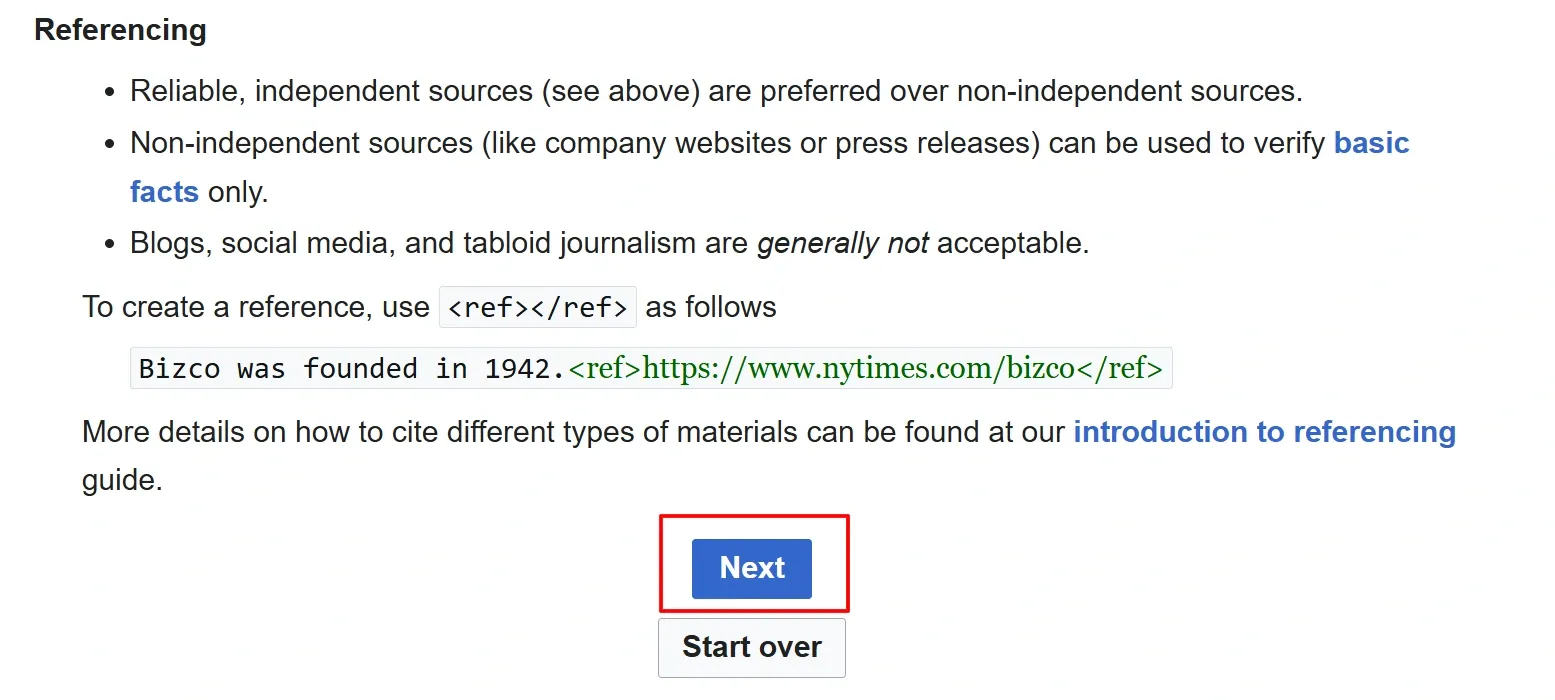
- The wizard will remind you of a few guidelines your content must follow to be publishable. At this point, you can click “Next”.
- The page will point out some common mistakes that keep new drafts from being published. It’s important to select “I’m not connected to the subject”.
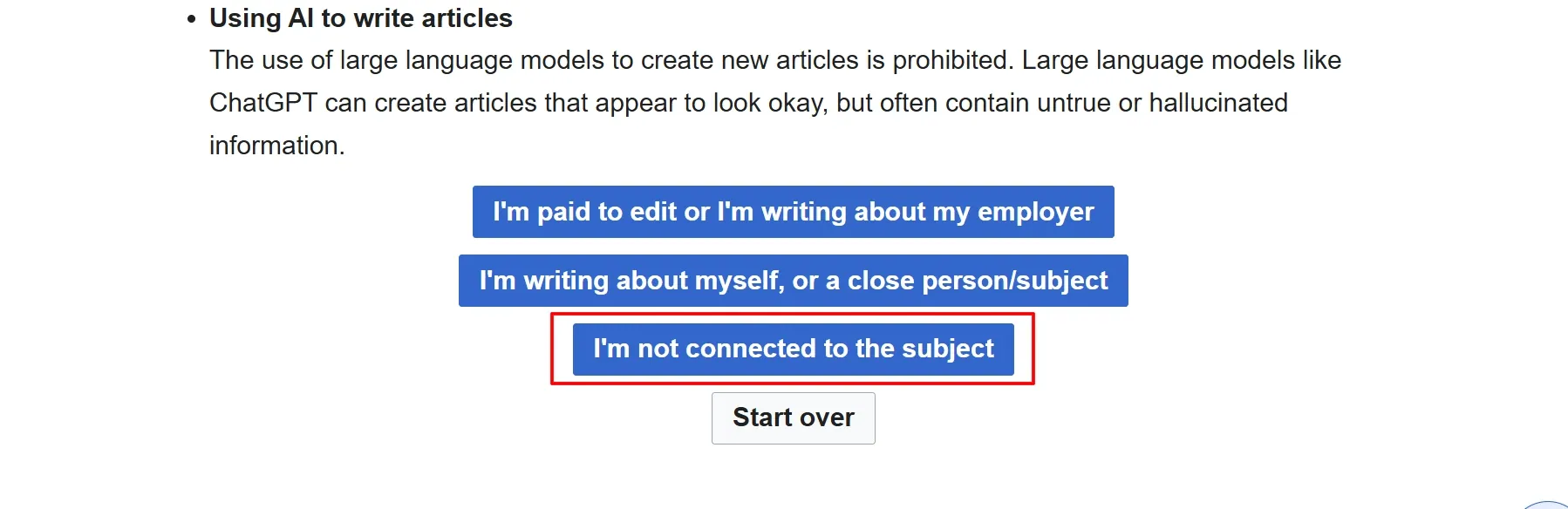
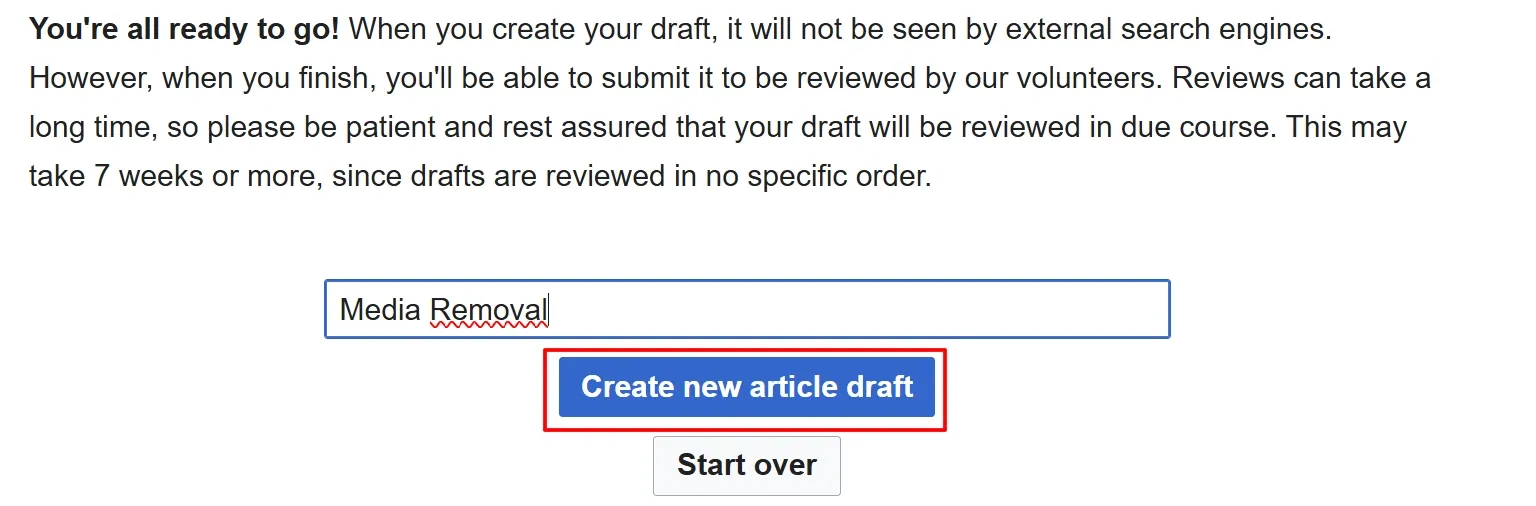
- Here, Wikipedia will ask you for a name for your article draft. Once you’ve entered it in the text box, it’s time to click “Create New Article Draft”.
- You’ll land on Wikipedia’s article editor, where you can write and format the page using several options. Once you’re done writing, select “Publish Page” to submit your text.
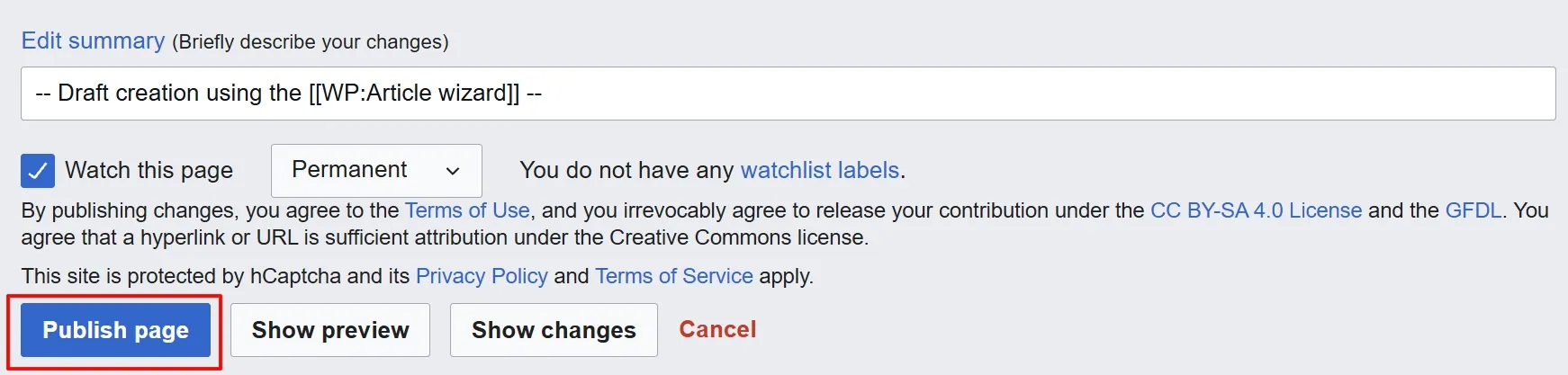
The draft will be reviewed by a team of Wikipedia volunteers, who will decide whether the content is fit for publication.
How long does a Wikipedia draft review take?
Wikipedia volunteers can take around 7 weeks or more to review a draft submitted by another user.
That said, the platform itself recommends patience throughout the process, since its volunteers tend to review drafts in no particular order.
How to create a Wikipedia page for a company?
The process for writing a Wikipedia page about a company follows the same steps that apply to the vast majority of encyclopedic articles on the platform.
However, for articles focused on companies, volunteers tend to apply much more rigorous and stringent criteria to minimize potential conflicts of interest surrounding these articles.
Common mistakes to avoid when creating a Wikipedia page
For the page you wrote on Wikipedia to have a real chance of being published by the volunteers, it’s important to avoid a series of common mistakes that could hurt the quality of your text:
- Plagiarizing or copying content: copying information from other websites, books, or blogs is a copyright violation and grounds for the immediate deletion or rejection of new pages.
- Lack of encyclopedic relevance: writing about people, projects, or situations without enough media relevance or notability can lead volunteers to reject a draft.
- Lack of neutrality: Wikipedia editors generally won’t accept text written in a promotional or opinion-based tone.
- Writing redundant content: submitting a draft with information that’s already covered in an existing article.
Regarding generative AI, Wikipedia moderators state that it’s strictly forbidden to include AI-generated content in encyclopedia drafts.

Take back control of your online reputation
We can review your case and offer a personalized solution to take back control of what’s said about you or your business online.
Get a quote in less than 24 hours
Can I create a Wikipedia page about myself?
Wikipedia advises users against creating a page about themselves, since such texts are unlikely to be impartial or to meet the encyclopedic relevance the platform requires for its articles.
That said, every user registered on Wikipedia has their own talk page that other users can use to leave public messages.
What can I do if Wikipedia rejects my draft?
If Wikipedia volunteers reject your page draft, you can read their feedback to understand what went wrong and use that to prepare a new text that better follows the platform’s rules.
Depending on the reasons Wikipedia volunteers give for rejecting your content, you may need to take one or more of the following actions:
- Improve your sources of information.
- Rewrite the text with a more neutral approach.
- Replace AI-generated content with human-written text.
- Replace plagiarized content with original material.
- Check whether the topic is redundant with an article that’s already published.
Finally, it’s very important to resubmit your text only once every change requested by the volunteers has been made. Submitting again with corrections left out will likely get your page rejected once more.
Related guide: Best Wikipedia page creation service and agencies in USA (2026)
Final thoughts on creating Wikipedia pages
Creating a Wikipedia page for yourself or your organization can be a major boost for your online reputation, as long as the page holds up over time.
Wikipedia volunteers tend to be very strict with user drafts. If these texts don’t meet the platform’s standards, they’re unlikely to be accepted.
That said, with so many rules and details to consider when writing on Wikipedia, you may not know where to start. If that’s your case, a team of online reputation specialists can help.
At Media Removal we can help you prepare a Wikipedia page that genuinely represents your business’s relevance within or beyond its industry, backed by the right reliable sources.
We invite you to schedule a meeting with our team to get support planning a Wikipedia page that passes editor review and includes the most important information about you or your projects.
 Subscribe to our newsletter
Reputation insights and industry news from the Media Removal team, straight to your inbox.
No spam. Unsubscribe anytime.