Summarize this post with:
Removing your information from data broker records tends to be a complex task, but not an impossible one.
There are different methods you can use to delete your private data from these companies’ records. Let’s look at five of them.
Method #1: search for these companies individually to request the deletion of your personal data
As a user, you have the option to search for data brokers individually on the Internet and request, one by one, the deletion of your data from their records.
Although it is a process that tends to demand a lot of time from the requester, you will not depend on third-party actions, nor will you need to pay for automated data removal tools.
How do I request that these organizations delete my data?
The process for asking data brokers to delete your information varies from one organization to another. However, there is a predefined structure that tends to remain the same regardless of the context.
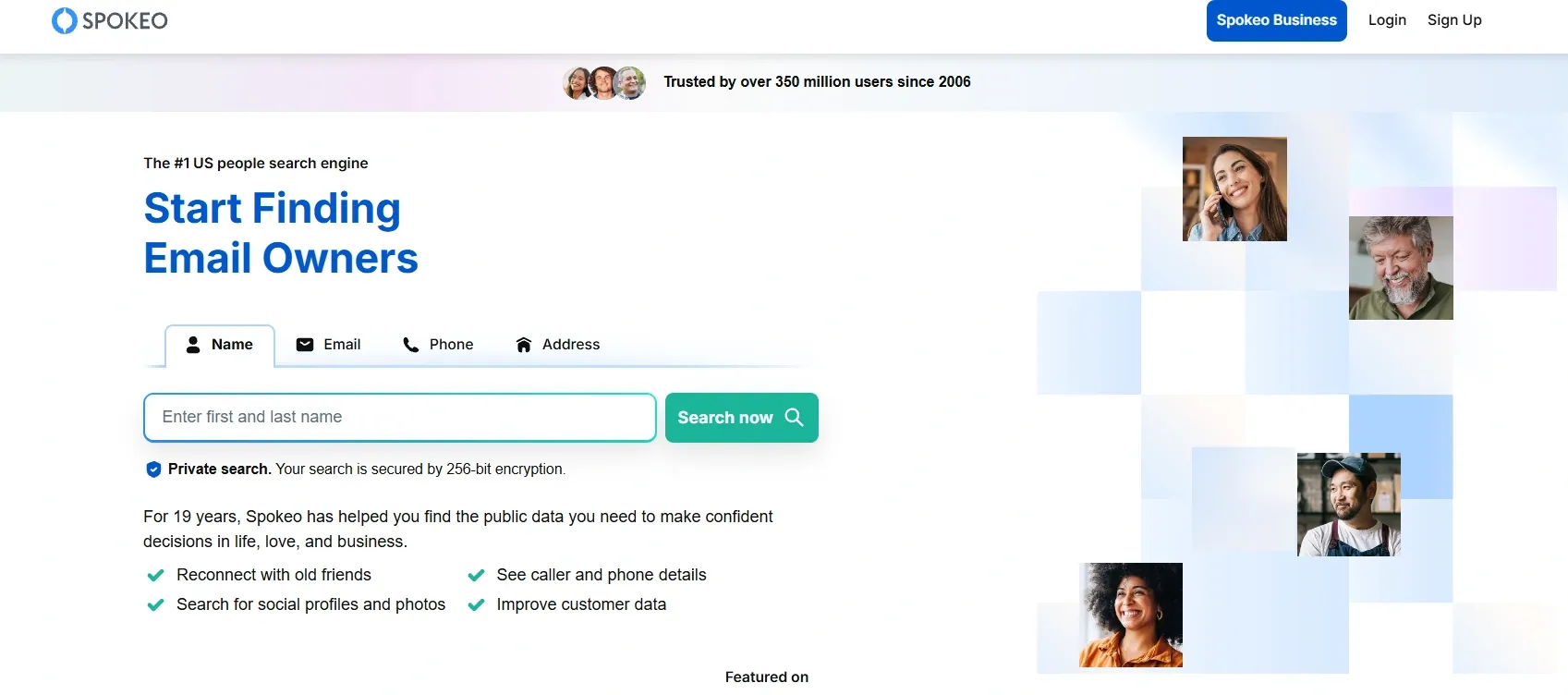
With that said, for the following example, we will use the procedure Spokeo offers its users to opt out:
- First, you need to go to the homepage of the data broker that holds part of your personal information.
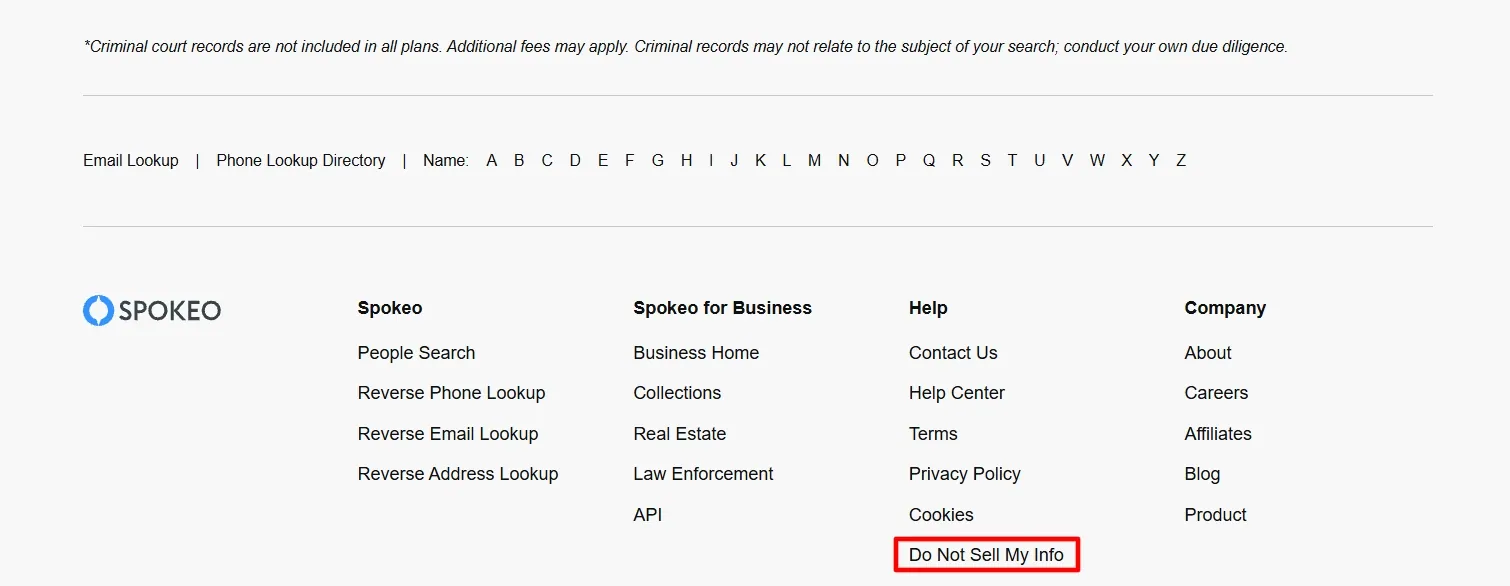
- Then, you need to scroll to the bottom of the page and select an option to remove your information. In this example, Spokeo labels this option as “Do Not Sell My Data“.
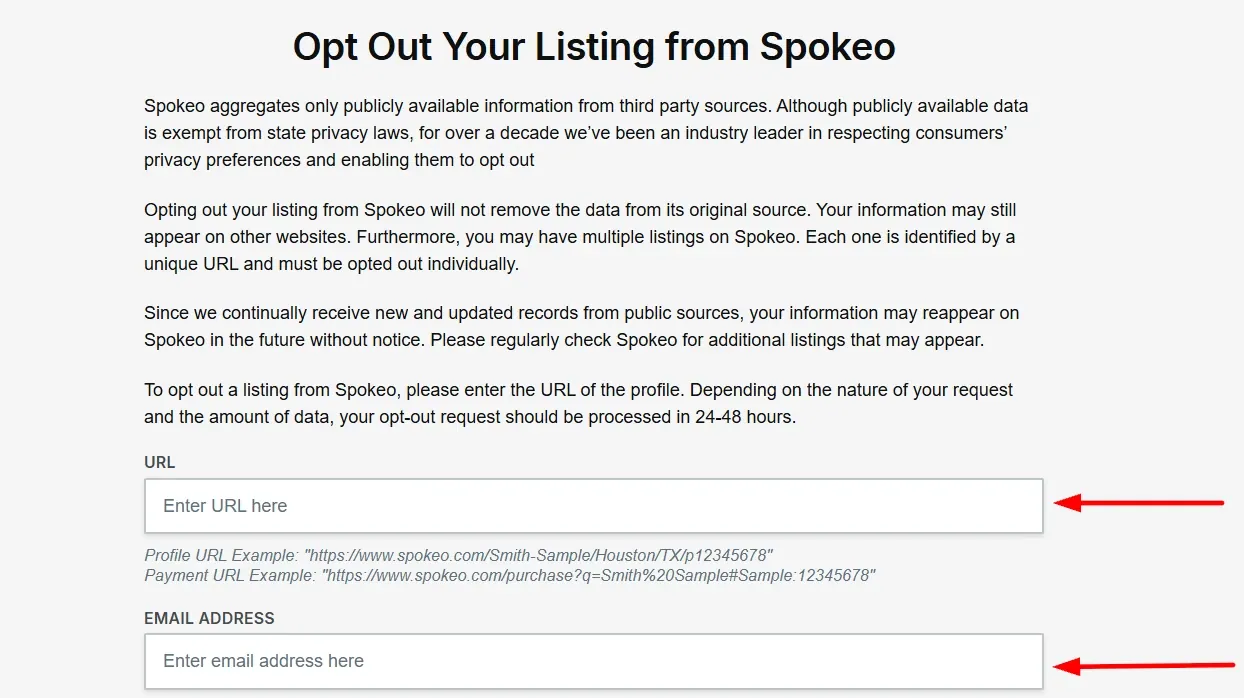
- The previous option will take you to a new page with a form you need to fill out to continue the procedure. In Spokeo’s form, you only need to include the URL of your profile on the site and an email address.
- To complete the process, you need to select “Opt Out“.
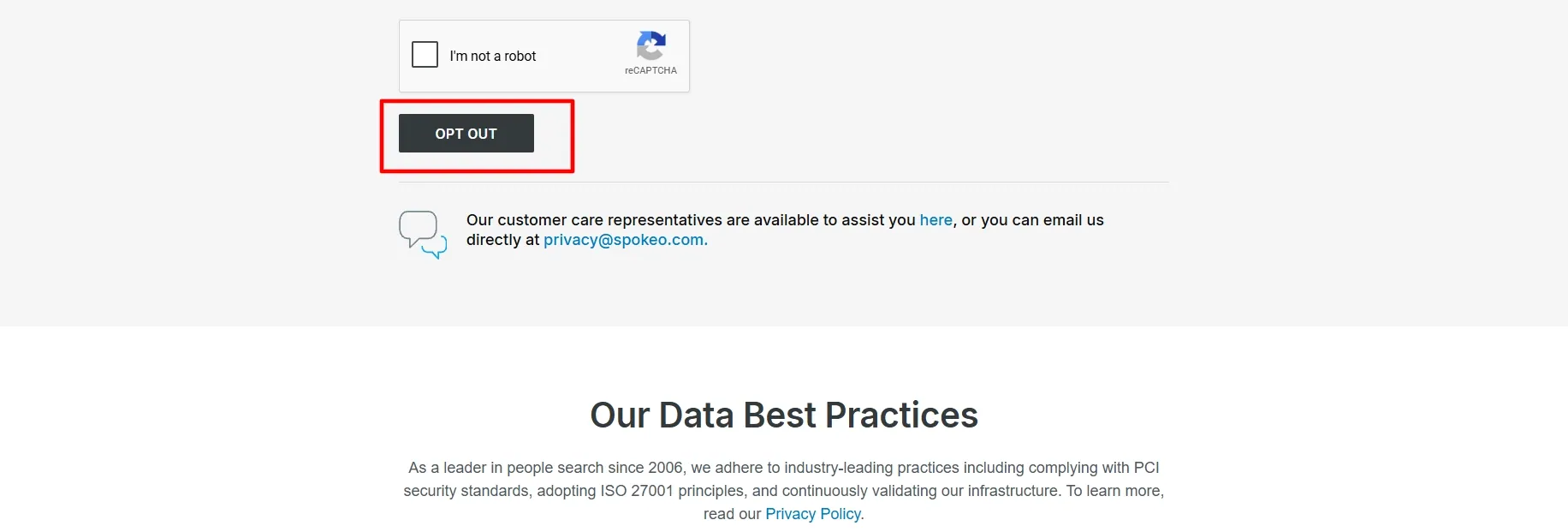
The time it takes a data broker to remove your information from its records varies by organization. Spokeo’s removal form, for example, states that the platform may process the user’s request within 1 or 2 days.
Method #2: use local or regional laws to request data deletion
Certain jurisdictions around the world have laws that help citizens request the deletion of their personal information from organizations such as data brokers. Among these laws are:
- Article 17 of the General Data Protection Regulation – European Union.
- Senate Bill 362 (Delete Act) – California, United States.
- Virginia Consumer Data Protection Act – Virginia, United States.
- Lei Geral de Proteção de Dados – Brazil.
The advantage of this method is that the different mechanisms available, depending on the context, have the backing of national, state, or even continental authorities.
How can I use these regulations to protect my personal data?
The procedure for using these data protection laws in your favor varies according to the regulation you wish to use.
If you live in the European Union, you have the option to invoke the right to erasure and send your request to the email address or physical address of the institution in question.
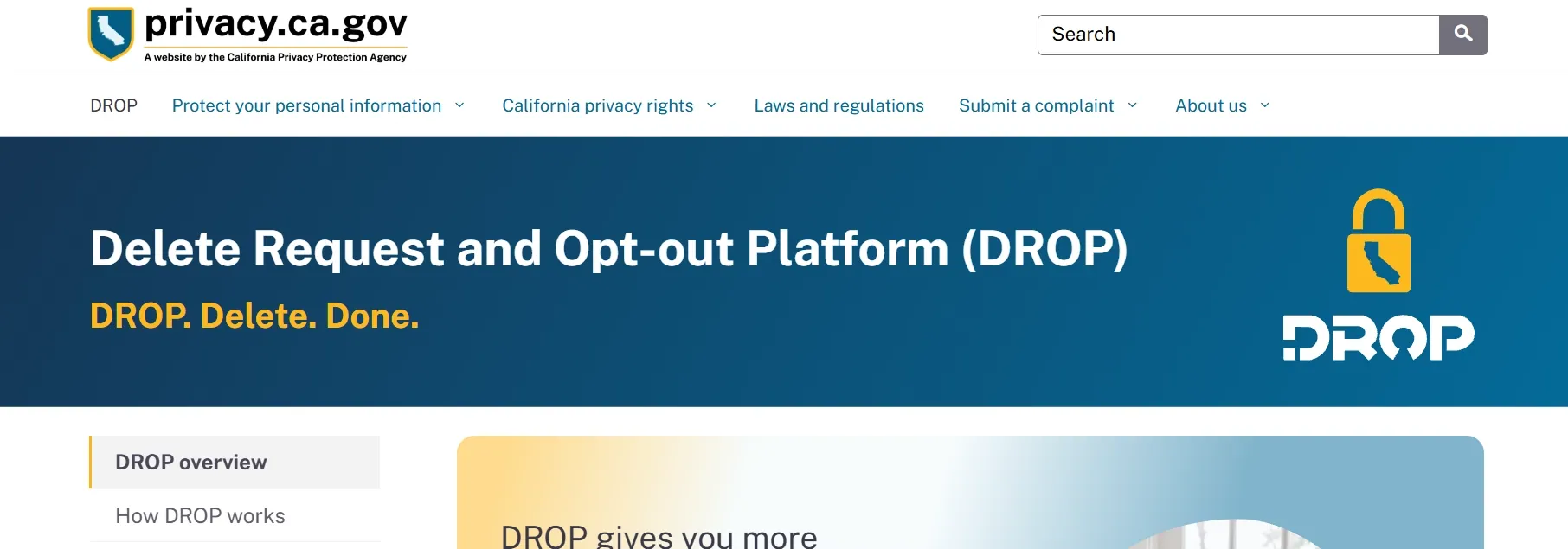
On the other hand, if you live in California, you can use the Delete Request and Opt-out Platform (DROP) so that around 600 data brokers review their records and delete the information they have stored about you.
Method #3: minimize the amount of information data brokers receive
You have the option to reduce the flow of data that data brokers tend to gather about you and, in that way, strengthen your privacy both on and off the Internet.
With that said, some of the strategies you can apply to minimize the information you hand over to these institutions are:
- Avoiding participation in loyalty programs.
- Turning off location tracking in your mobile apps.
- Using a private browser that does not leave a browsing history.
- Using a VPN to prevent your web activity from being tracked.
- Keeping one phone number for friends and family and another for filling out surveys and forms.
- Using different email addresses.
An additional action you can take is to turn off personalized advertising options in your apps, since letting this advertising keep appearing means continuing to allow apps to discover your recent tastes and habits.

Take back control of your online reputation
We can review your case and offer a personalized solution to take back control of what’s said about you or your business online.
Get a quote in less than 24 hours
Method #4: Turn to an automated information removal service
Different platforms on the Internet offer automatic removal of personal data from data brokers so that companies or individuals do not have to take on this task themselves.
In general, these services work as follows:
- The user enters their personal information on the website.
- The service uses that information to track data across hundreds of websites.
- The software applies different laws and procedures to request the removal of your data.
- The person uses a management dashboard to review the status of each request.
- The platform will continuously monitor the web to prevent the data from being published again.
These removal services are usually not free, so it is likely that companies or individuals interested in using them will need to pay monthly or annual fees to gain access to them.
Examples of automated personal data removal services
On the Internet, there are different platforms that offer this removal service to both individuals and organizations. Four examples of this type of software are:
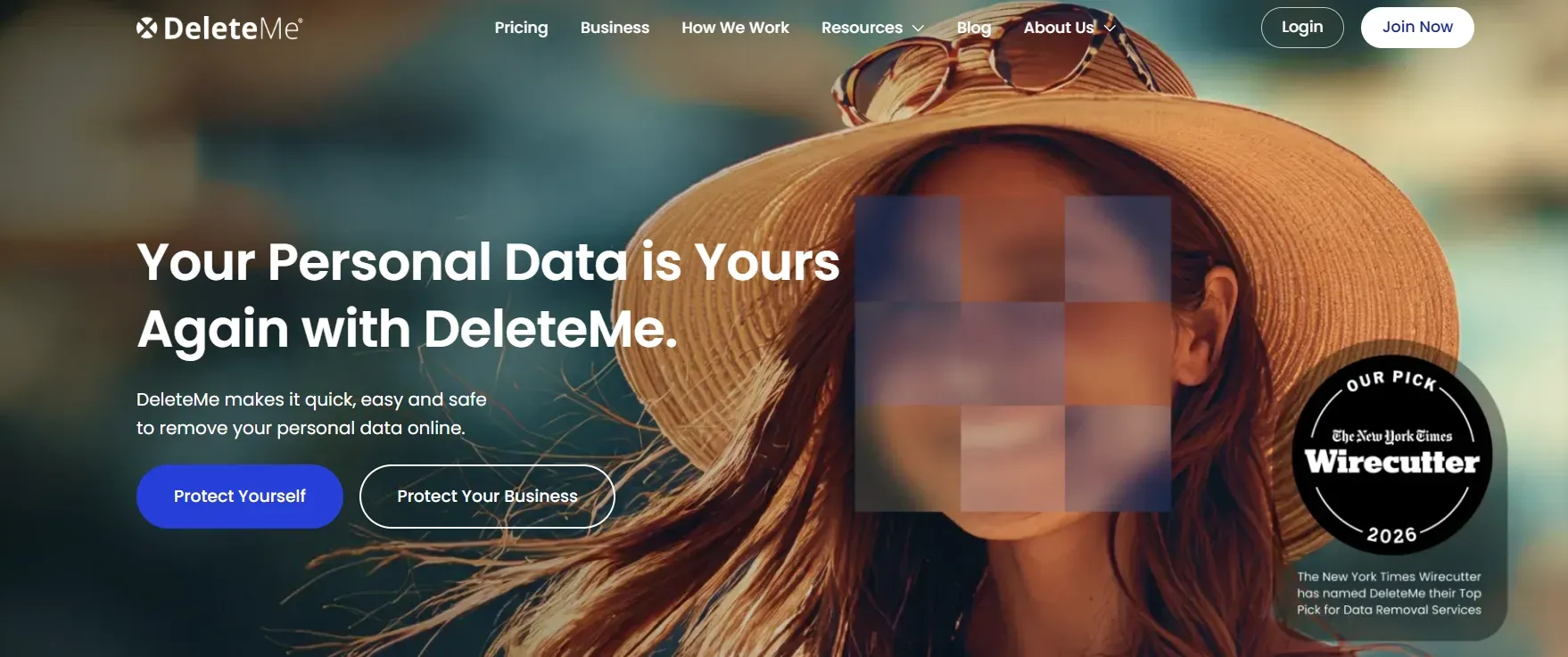
- DeleteMe.
- Incogni.
- Optery.
- Aura.
It is important to note that Optery only works automatically on its paid plan. If the user chooses to use this service at no cost, the platform will limit itself to showing which sites host the person’s information and offering instructions for its removal.
Method #5: Hire an online content removal company
Hiring a company that specializes in removing online content tends to be a good option for organizations and individuals looking for an alternative better tailored to their circumstances.
With that said, these companies usually carry out the following actions for the benefit of their clients’ privacy:
- Sending mass requests: these organizations automate the sending of removal requests to reach hundreds of data brokers on a recurring basis.
- Constant monitoring: these companies carry out continuous monitoring to prevent their clients’ data from being exposed again without their consent.
- Use of technical and legal channels: thanks to their experience with similar cases, these groups tend to know very well the procedures and forms needed for data removal to be successful.
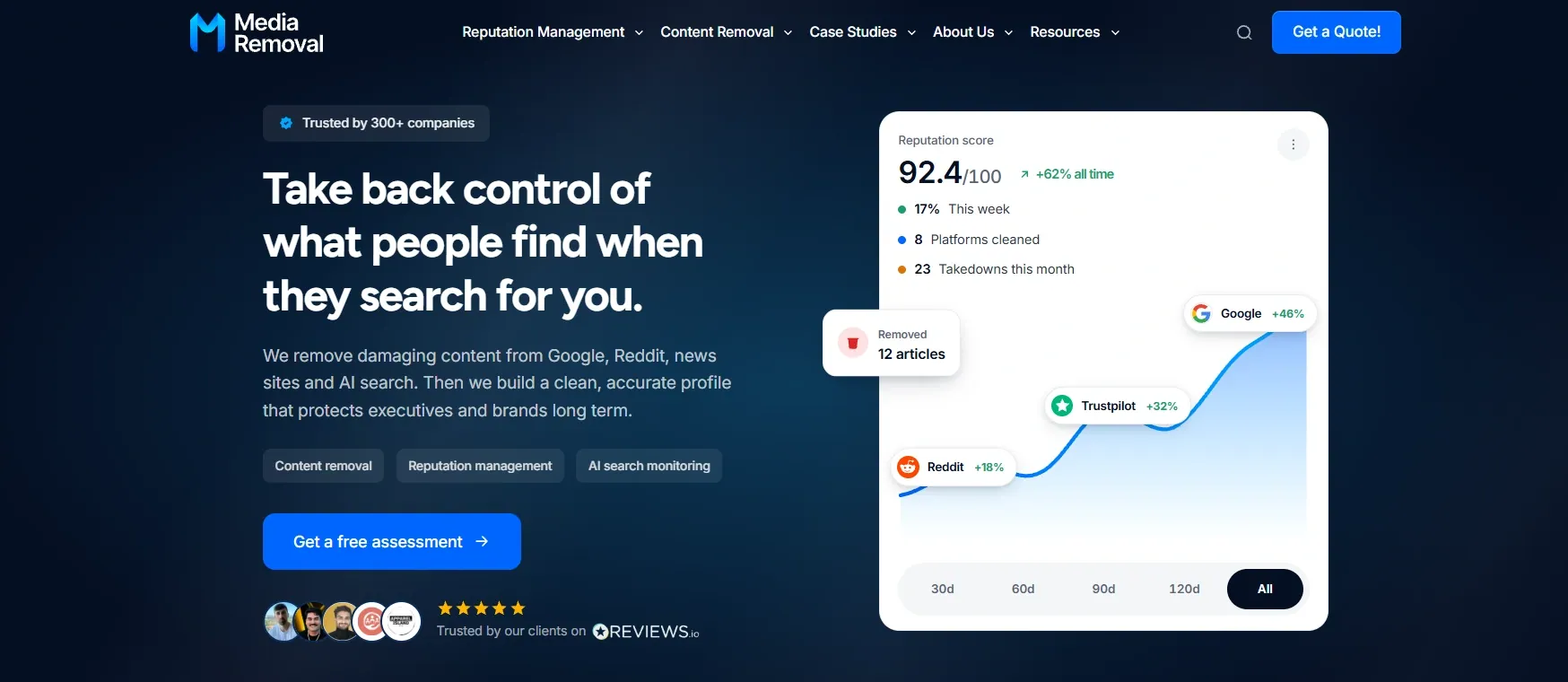
Depending on the volume of information to be managed, hiring an information removal company tends to require a significant investment from the client. However, the results achieved with this method are usually of a high standard.
Similarities and differences between these information removal methods
The following comparison table can be useful for understanding the differences and similarities between the five methods we described earlier:
| Criteria | Requesting removal from each broker | State or regional laws | Minimizing the data received | Removal services | Information removal companies |
|---|---|---|---|---|---|
| What does it involve? | Finding the profile on each site and completing its opt-out form. | Exercising privacy rights and laws to demand deletion. | Reducing your digital footprint so data brokers have less information to process. | Subscriptions that send removal requests that are monitored frequently. | Hiring a specialized agency that handles the process on your behalf. |
| Strengths | Free procedure and full control over the process. | Legal backing and the possibility of companies being fined for non-compliance. | Its low cost and the way it complements other methods. | Monitoring tends to be continuous, with coverage across hundreds of sites. | Personalized attention to your case and a combination of data removal and suppression methods. |
| Limitations | Researching each site requires many hours, and the data is likely to reappear. | The availability of these laws depends on the requester’s place of residence. | Public records continue to feed brokers with the available data. | Results tend to vary greatly between providers, and no service covers every site. | The cost of these organizations tends to be very high. |
| When to use it? | When there is time available for the task. | When residing in a jurisdiction with strong privacy laws. | Always, as a long-term preventive habit. | When continuous protection is wanted without manual work. | You need to remove this data as quickly as possible regardless of the cost. |
If you have time available, self-managing deletion requests is likely to be a good option. If that is not your situation, but you have a significant budget, you may want to turn to a removal company.
Related guide: Antivirus, VPNs, and Browser Extensions: How They Collect Information About You
Final recommendations on opting out of data brokers
Although data brokers tend to manage your personal information without your express consent, there are different solutions you can use to gain greater control over your data.
With that said, it is important that you evaluate your availability of time and money to determine which alternative seems to best fit your context and which option might not be convenient to use in the first instance.
Now, if you want to prioritize achieving effective results over the potential investment you may need to make to get them, turning to an expert content removal company is likely to be your best option.
At Media Removal, we have experience managing content removal processes in the records of data brokers, social networks, and other spaces on the Internet that may store our clients’ sensitive information.
If you need to remove your information from the records of a data broker or from sites such as Instagram, Threads, and Reddit, we invite you to schedule a meeting with our team of experts.
 Subscribe to our newsletter
Reputation insights and industry news from the Media Removal team, straight to your inbox.
No spam. Unsubscribe anytime.