Summarize this post with:
Traditionally, SEO has focused on improving a website’s organic visibility in search engines to generate more traffic.
This has changed in recent years, as companies across different sectors have come to understand the importance of recommendation algorithms online and how customer expectations shape their purchasing decisions.
Because of this, a growing number of organizations and public figures are paying closer attention to how they manage their image online. This has driven the development of a new approach to online positioning known as reputational SEO.
We invite you to take a closer look at this emerging approach to search engine positioning. Learn how reputational SEO works, its practical benefits for companies and public figures, its main differences from traditional SEO, and other relevant information.
What is reputational SEO?
At its core, reputational SEO can be defined as the use of search engine optimization techniques to control the information people find about a brand, company, or public figure.
While traditional SEO tends to focus on strengthening the visibility of content around specific keywords, reputational SEO usually goes hand in hand with specific searches related to:
- Brands.
- Products.
- Services.
- People.
In this way, reputational SEO can become a boost that helps different organizations and public figures reflect their true value on the results page and prevent the appearance of negative, false, or defamatory content.
When is reputational SEO needed?
Reputational SEO may not be a permanent need for every entity, but rather a response to specific situations that threaten its standing with the public.
When what appears on Google becomes a possible factor behind the loss of customers, opportunities, or trust for a company or person, reputational SEO efforts can serve as a way to contain and solve the problem.
The following scenarios are some of those that lead organizations and celebrities to implement a reputational SEO plan.
The brand or public figure has many negative results
This scenario tends to be one of the most common triggers for developing a reputational SEO plan.
The reason is that harmful content appearing in searches related to a brand or public figure can negatively impact the online narrative of that business or person and, as a result, diminish aspects such as:
- Credibility.
- Trust.
- Authority.
When these elements are called into question, opportunities and reputation begin to deteriorate, affecting how the brand is perceived both online and offline.
Launching a new product or service
When an entity is about to launch a new product or service, reputational SEO tends to come into play to protect and strengthen the brand against the scrutiny it will face in the short and medium term.
One important reason for this is that, in many cases, the first results the public sees can shape their initial perception of the launch.
In this situation, reputational SEO can help brands control the first impressions of the product, preventing potential gaps that unfavorable comparisons or negative comments could fill.
Rapid growth of a company or person
The more visible a person or business becomes online, the more searches their name generates, and the more likely they are to become part of the public conversation.
This can give rise both to genuine interest from people who identify with the project or public figure and to the emergence of critics and detractors who damage their public image.
Rapid growth also increases the chance that old profiles, outdated information, or third-party content will rank in searches without any control or monitoring by the brand or person.
Cases of defamation by competitors
When a person or project starts to be the target of numerous reviews or articles questioning their image, and there are no real reasons to justify it, this is likely a case of defamation.
Situations like this can happen when a competitor wants to position itself better within its sector and needs to sow doubt about the other options on the market. In this scenario, the reputational SEO response usually combines two fronts:
- Removal of content that violates policies or laws.
- Suppression of information that cannot be taken down.
It is worth noting that, in a defamation case, documenting the potential attack becomes highly valuable, as it serves as a resource for filing formal complaints and, where applicable, legal claims.

Take back control of your online reputation
We can review your case and offer a personalized solution to take back control of what’s said about you or your business online.
Get a quote in less than 24 hours
How does reputational SEO differ from traditional SEO?
One way to better understand what makes reputational SEO a unique area within online positioning is to compare this approach with traditional SEO.
Comparing reputational SEO vs traditional SEO becomes quicker and easier with the table below.
| Criteria | Traditional SEO | Reputational SEO |
|---|---|---|
| Main goal | Rank a website to capture traffic and conversions. | Control what appears when someone searches for the brand or person. |
| Core keyword | Commercial and informational terms within the sector. | The name of the brand, product, or person. |
| Search intent | Answer a user need. | Protect perception and displace harmful content. |
| Position goal | Push your own website to the top of the results. | Dominate as many first-page results as possible. |
| What you work on | Only your own properties. | Your own properties and third-party ones (press, profiles, directories). |
From this table, we can conclude that, while traditional SEO leans mainly offensive, reputational SEO involves both attack and defense from the perspective of an organization or person.
This area can involve actions that protect a brand’s integrity as well as strategies that act directly on the potential points of conflict a project or public figure cannot manage on their own.
How does reputational SEO work?
When the goal of SEO leans toward online reputation management rather than organic positioning, specialists’ strategies tend to differ from traditional ones.
Building authority, consistency, and trust tends to be the ultimate goal of reputational SEO. To achieve these objectives, those working in the field usually develop strategies like the following.
Search audit
Search audits tend to be one of the first actions within reputational SEO, and their goal is to identify what queries the public makes about a brand, public figure, or organization.
When organizations or public figures discover the information people find about them online, they gain room to strengthen the positive aspects and detect content that could harm their image with the public.
Active review management
This reputational SEO strategy relies on continuous intervention in the opinions users publish about a person or entity.
In many cases, active review management becomes one of the most direct efforts of this SEO approach, since reviews influence two valuable aspects of online reputation:
- How users perceive a brand or person.
- The rich snippets Google generates.
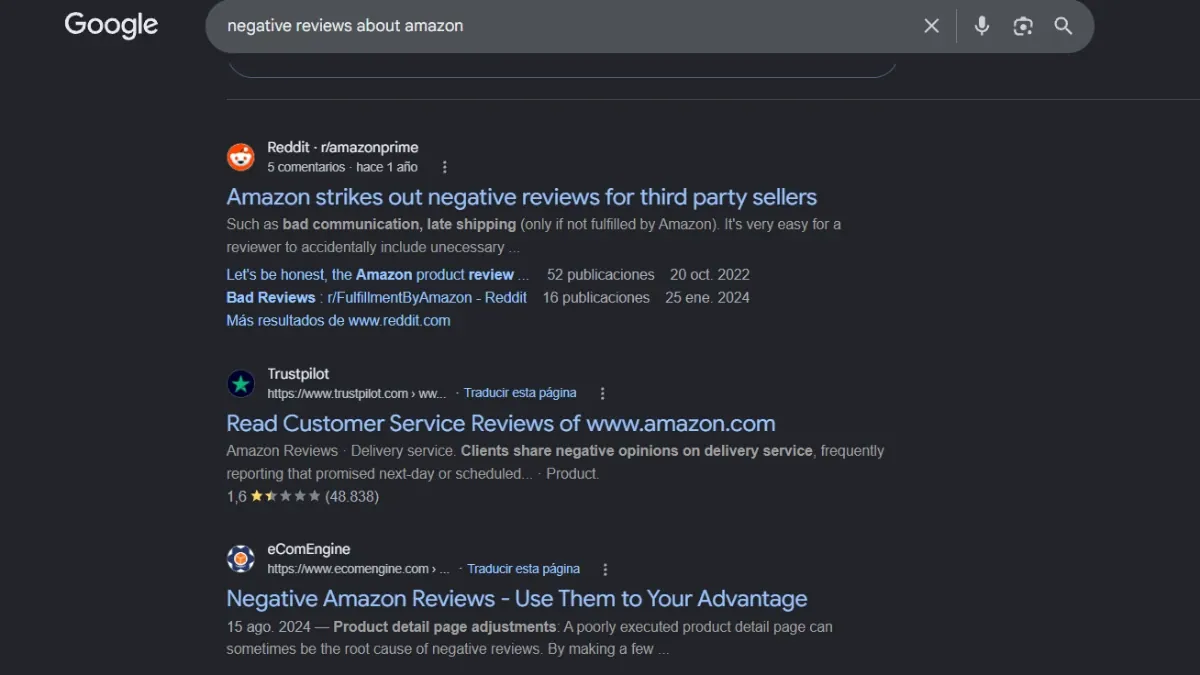
In this sense, one of the key actions in active review management tends to be systematically requesting positive reviews from satisfied customers on specialized platforms in order to strengthen brand image through social proof.
Content suppression
In a reputational SEO plan, content suppression is usually designed as a way to reduce the visibility of negative content that can influence how people perceive a public figure or company.
Content suppression is not the same as removal, since the harmful content is not deleted from the search results or from the platform where it was published.
Instead, suppression tends to focus on “pushing” the harmful content toward secondary pages of Google so that it is not easy to find.
Optimizing external profiles
This profile optimization process consists of setting up and activating business or notable-individual accounts on third-party platforms, such as:
- Business directories.
- Social networks.
- Professional networks.
The goal of these actions is usually to unify and update the brand’s narrative across the digital spaces where it has a presence, as well as to let it reflect its real values and the processes that support it.
Benefits of reputational SEO for companies and public figures
When the efforts to strengthen a project’s or person’s reputation in search engines are solid and sustainable over time, tangible benefits begin to appear and translate into business results.
The following benefits work as examples of reputational SEO and the real effect it tends to have on brands and public figures.
Control and protection against present and future crises
A brand that already has well-developed owned assets and a steady flow of reviews and positive content is less likely to be affected by isolated negative events, such as:
- An occasional bad review.
- An unfavorable press story.
- An attack from a competitor.
In these cases, positive content can act as a cushion and a foundation for building a better response.
The brand does not react from scratch; it already has a base that absorbs the impact.
Increased trust and conversion opportunities
When a brand’s search results contain positive reviews and well-ranked owned content, the customer’s buying process is freed from potential points of friction.
This is a control over the digital narrative that translates into:
- More qualified leads.
- Higher conversion rates.
- Better repeat-purchase opportunities
The reason is that positive content can help the user feel more certain and confident about the product or service they are about to purchase.
Strengthening brand visibility
Beyond protecting a project or person from false or misleading content, occupying multiple positions on the first page of results can also mean multiplying the touchpoints with the audience.
Each of those assets can reinforce brand recognition and increase the likelihood that the user interacts with content controlled by the company rather than external or unreliable sources.
A boost to attracting talent and business partners
Digital reputation does not only affect customers and potential prospects. It can also influence candidates researching their next employer.
This also applies to investors and business partners, who tend to evaluate online reputation as one of their first filters when deciding whom to close a deal with and whom to turn down.
As a result, a company or person with a solid online presence free of red flags tends to find it easier to attract top-level talent and secure strategic alliances, since it reduces any doubts that may exist before these commitments.
Related guide: Reputational SEO is the method. For the full process of pushing negative results down, see our guide to negative content suppression on Google.
You can turn to reputational SEO to protect and strengthen your online presence

For companies and public figures interested in gaining greater control over their Google search results, reputational SEO can be an appealing option.
Unlike traditional organic positioning, the backbone of this area is the ability to control what appears when someone searches for a brand or person in the search engine.
In this way, both organizations and public figures have the opportunity to reflect their true values and strategically place positive content into the online conversation to improve their positioning in the market.
This makes reputational SEO an emerging solution that more and more clients request when they look for specialized online reputation services to strengthen how their image is perceived.
At Media Removal, we develop action plans focused on online reputation management and the removal of defamatory content that help both public figures and organizations gain greater control over their digital narrative.
If you need reputational SEO solutions tailored to your circumstances and business goals, you can book a call with us so we can assess your case and build, together, a strategy grounded in real data and information.
 Subscribe to our newsletter
Reputation insights and industry news from the Media Removal team, straight to your inbox.
No spam. Unsubscribe anytime.