

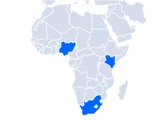
 Country guide · Africa

This guide is general information about the law in Kenya, checked against the sources listed below on November 1, 2026. It is not legal advice. Laws change and every case is different: for advice on your situation, speak to a qualified lawyer in Kenya.
01Defamation law in Kenya
Where the law comes from
Kenyan courts apply the Constitution first, then written laws, and only where those do not reach a question, the substance of English common law and equity as it stood on 12 August 1897, adapted to local circumstances. For defamation, the Defamation Act consolidates and amends the statute law on libel, slander and other malicious falsehoods, while common-law rules fill the gaps the Act leaves.
Sources1Judicature Act (Cap. 8), s. 3(1)2Defamation Act (Cap. 36), long title
Is defamation a crime?
In Okuta v Attorney General (2017), the High Court declared section 194 of the Penal Code, the criminal defamation offence, unconstitutional and invalid except where it covers speech falling within Article 33(2)(a)-(d) of the Constitution, such as incitement to violence or hate speech. In March 2026 the Court of Appeal also held sections 22 and 23 of the Computer Misuse and Cybercrimes Act, the false publication offences, unconstitutional because they were too broad. Outside those narrow categories, a false statement that harms someone's reputation is pursued through a civil claim.
Sources3Okuta & another v Attorney General & 2 others [2017] KEHC 8382 (KLR), declarations4Bloggers Association of Kenya (BAKE) v Attorney General & 6 others [2026] KECA 430 (KLR), para. 1535Computer Misuse and Cybercrimes Act (Cap. 79C), ss. 22 and 23
Statute of limitations
A tort claim in Kenya generally must be filed within three years, but a claim for libel or slander must be brought within twelve months of the date the cause of action accrued. This shorter period was added to the Limitation of Actions Act by the Defamation Act.
Sources6Limitation of Actions Act (Cap. 22), s. 4(2) and proviso2Defamation Act (Cap. 36), s. 20
Defamation per se
For slander, the Defamation Act removes the need to allege or prove special damage when the words are likely to disparage the claimant in their office, profession, calling, trade or business, or when they accuse a woman or girl of unchastity. For libel, the Act sets minimum damages when the libel concerns a serious offence: at least KSh 1,000,000 for an offence punishable by death and at least KSh 400,000 for an offence punishable by three or more years in prison.
Retraction and correction
A person or body harmed by a damaging factual inaccuracy in a newspaper has a statutory right of reply. The request must be made in writing to the editor or publisher within 14 days of publication, and the right cannot be used more than six months after publication. The correction must be printed free of charge, with similar prominence, in the next possible edition. In a later libel case the court may add damages if the newspaper refused, and may reduce damages if the claimant did not use the right of reply. Separately, a defendant may offer evidence of an apology made or offered early on to reduce damages.
Defenses and public figures
Truth (justification) and fair comment are the main defenses. Under the Act, justification does not fail just because not every charge is proved, provided the unproved charges do not materially injure the claimant's reputation in light of those that are proved; fair comment is treated the same way where not every fact is proved. Fair and accurate newspaper reports of court proceedings in Kenya are absolutely privileged, and reports listed in the Act's Schedule have qualified privilege unless malice is proved, subject to conditions set out in the Act.
Source2Defamation Act (Cap. 36), ss. 6, 7, 14 and 15 and Schedule
02Online harassment, cyberstalking and doxxing in Kenya
Cyberstalking
Kenya has no offence called cyberstalking. Persistent online targeting can fall under cyber harassment: it is an offence to wilfully communicate, directly or indirectly, with a person or someone they know when you know or ought to know the conduct is likely to make them fear violence or damage to their property. The maximum penalty is a fine of KSh 20 million, ten years in prison, or both.
Source5Computer Misuse and Cybercrimes Act (Cap. 79C), s. 27(1)(a) and (2)
Online harassment
The cyber harassment offence also covers communications that are wholly or partly indecent or grossly offensive and affect the person. A complainant, or an intermediary on their behalf, can ask a court to order the accused to stop the communications; the court may make an interim order and must decide the application within 14 days. In 2026 the Court of Appeal rejected a constitutional challenge to section 27.
Sources5Computer Misuse and Cybercrimes Act (Cap. 79C), s. 27(1)(c) and (3)-(5)4Bloggers Association of Kenya (BAKE) v Attorney General & 6 others [2026] KECA 430 (KLR), paras. 148-150
Doxxing
Kenya has no offence called doxxing. The Data Protection Act, however, makes it an offence to obtain personal data without the prior authority of the controller or processor that keeps it, or to disclose personal data to a third party. Employees and agents acting within their mandate are excluded.
Intimate images shared without consent
It is an offence to transfer, publish or spread another person's intimate or obscene image, including by making a digital copy available for distribution or download. The maximum penalty is a fine of KSh 200,000, two years in prison, or both.
Source5Computer Misuse and Cybercrimes Act (Cap. 79C), s. 37
03Data protection and the right to have content removed
The Data Protection Act, 2019 gives people the right to object to the processing of their personal data and to have false or misleading data about them corrected or deleted. They can ask a data controller or processor to erase, without undue delay, data it is no longer authorized to keep or that is irrelevant, excessive or unlawfully obtained. A person aggrieved by a decision made under the Act can complain to the Data Commissioner.
Source7Data Protection Act, 2019 (Cap. 411C), ss. 26, 40 and 56
04How to remove defamatory content in Kenya
How to remove defamatory content in Kenya
A lawsuit is one route, but it is slow, costly and public. Much harmful content can come down sooner through the platform’s own reporting process, a legal notice to the site owner or host, or a removal request to search engines. The right route depends on where the content lives and on the law that applies to it.
Media Removal reviews each case and recommends the fastest route that fits it. Removal always depends on each platform and, where relevant, the courts.
05Frequently asked questions about defamation in Kenya
How long do you have to sue for defamation in Kenya?
A libel or slander claim must be brought within twelve months of the date the cause of action accrued. That is much shorter than the three-year limit that applies to most other tort claims.
Is defamation a crime in Kenya?
Mostly not. In 2017 the High Court declared the Penal Code's criminal defamation offence unconstitutional except for narrow categories of unprotected speech, and in 2026 the Court of Appeal held the cybercrime law's false publication offences unconstitutional. Harm to reputation is now mainly pursued through a civil claim.
Can I ask a Kenyan newspaper to publish a correction?
The Defamation Act gives a right of reply to a damaging factual inaccuracy in a newspaper if you write to the editor or publisher within 14 days of publication. The correction must be printed free and with similar prominence, and in a later libel case a court can add damages if the newspaper refused.
Is online harassment illegal in Kenya?
Section 27 of the Computer Misuse and Cybercrimes Act makes cyber harassment an offence, and a complainant can ask a court for an order to stop the communications. Sharing someone's intimate images without consent is a separate offence under section 37.
Can I ask for my personal data to be deleted in Kenya?
Under the Data Protection Act, 2019, you can ask an organization to delete personal data about you that is false or misleading, irrelevant, excessive, unlawfully obtained or no longer authorized to be kept. If you are aggrieved by a decision made under the Act, you can complain to the Data Commissioner.
06Defamation laws in nearby countries


07Sources
- Judicature Act (Cap. 8), s. 3(1)
- Defamation Act (Cap. 36), long title
- Okuta & another v Attorney General & 2 others [2017] KEHC 8382 (KLR), declarations
- Bloggers Association of Kenya (BAKE) v Attorney General & 6 others [2026] KECA 430 (KLR), para. 153
- Computer Misuse and Cybercrimes Act (Cap. 79C), ss. 22 and 23
- Limitation of Actions Act (Cap. 22), s. 4(2) and proviso
- Data Protection Act, 2019 (Cap. 411C), s. 72(3)-(4)