
Over 300 companies trust Media Removal. Get a Quote Now >
Who is winning the AI privacy war: the companies that make the most of your data are pulling ahead
The race for artificial intelligence is no longer decided in the lab. It is decided in your conversations, your emails and your photos. And by mid 2026 the pattern is hard to ignore: the companies that make the most of your personal data are the ones winning.
 Written by
Media Removal
Reading time
1 min
Published
Written by
Media Removal
Reading time
1 min
Published
Summarize this post with:


For three years the story was one of a contest of cleverness: who had the biggest model, the fastest, the smartest. That story is now old.
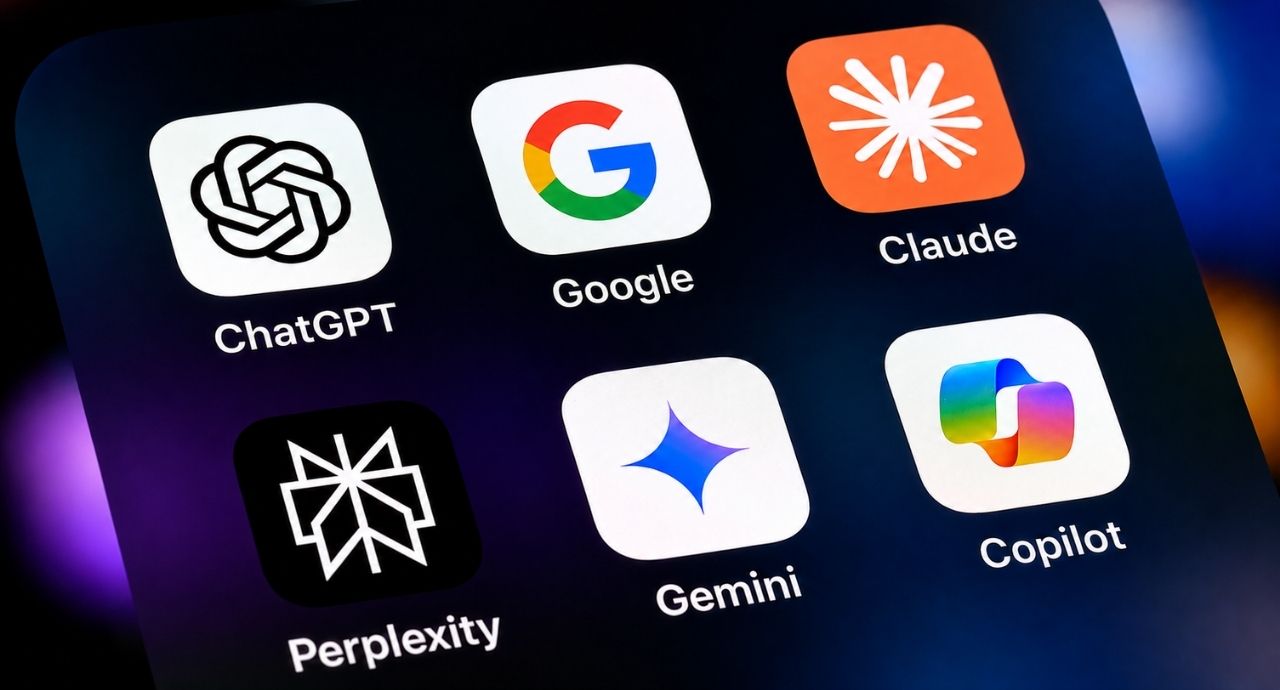
The real fight between OpenAI, Google, Anthropic and the rest is over the raw material that trains those models, the data of millions of people, and whoever has access to more quality data is in the lead.
The shift has an awkward loser. Apple, the company that turned privacy into a banner, is late to almost everything that matters in generative AI, and much of that delay comes down to its refusal to train on its users’ data.
The result is a paradox that defines this moment. The more a company respects your privacy, the harder it is for it to compete. The more it reaches into your digital life, the better its results. That is the real AI war of 2026, and it is already producing winners and laggards.
The fuel is no longer the algorithm, it is your data
The moves of recent months confirm a deeper shift: the race went from a fight over model size to a war over high quality contextual data. That data, real conversations, emails, messages and images, cannot be bought from a catalog. It has to be pulled from users.
That is why almost all of the big players have shifted their terms in the same direction over the past year: collect more, keep it longer and use it to train. Privacy stopped being a selling point and became a competitive drag.
Google, the quiet frontrunner
While the world watched OpenAI, Google quietly moved to the front. Its advantage is not an engineering trick, but something no rival can buy: a colossal trove of data fed by Gmail, Search, Android, YouTube and now also Gemini conversations from free and paying users.
In early 2026 the company began asking those users for permission to let Gemini draw on personal content from services like Gmail and Google Photos for training. With opt out controls, yes, but with a clear message: Google wants that private material to make its next leap.
Industry analysts argue that this combination of massive data, in house infrastructure and the cash to fund it explains why Gemini went, in a short time, from trailing ChatGPT and Claude to competing head to head at the frontier. In this war, its user base is the decisive weapon.
OpenAI: the scale a court laid bare
OpenAI is still the public face of AI, and it too piles up data on an enormous scale. The company keeps tens of billions of ChatGPT conversation logs in the normal course of business, a volume that only became visible when the courts stepped in.
In January 2026 a federal judge in New York upheld the order requiring the company to hand over twenty million conversations, already anonymized, as part of the copyright litigation brought by the New York Times and other publishers. The affected users were not notified and could not object.
The episode left more than a courtroom headline. It showed how much personal data lives inside these machines and how little the user controls its fate. It was also a reminder that what is retained rarely disappears completely, a reality that goes well beyond any single case and that we explain in why deleted content still shows up online.
Anthropic, the privacy brand that switched sides
Anthropic’s case is the most telling sign of the change of era. The company built a reputation as the cautious alternative and promised for years not to train on its consumer users’ conversations. In August 2025 it reversed course.
Since then, chats from Claude’s free and paid plans are used to train the model unless the user explicitly turns it off, and data retention stretches to five years for those who agree. The company insists it does not sell data and that it filters out sensitive information, but the move was unmistakable.
That even the firm that made privacy its hallmark ended up opening that door confirms which way the wind is blowing. To stay in the fight, you have to feed on user data.
Apple and Siri: the price of not touching your data
At the other end is Apple, and its story is the clearest proof of the thesis. The company unveiled a revamped Siri in 2024 with promises of personal context and actions inside apps. Almost two years later, those features still have not arrived. In February 2026, fresh reports placed the launch, at best, at the end of this year.
Apple does not hide the root of the problem. Its approach relies on processing on the device itself and on not using third party or user data to train, a stance that clashes head on with what Google or Amazon do, both willing to soak up information to improve fast. According to recent reports, the company even scaled back its plans for Siri to scan the user’s personal data.
The outcome speaks for itself. To rescue its assistant, Apple will turn to Google’s Gemini models, even as it promises to keep its own approach to privacy. The company that refused to mine your data ends up leaning on the one that mines it best. Its bet may age well the day the big privacy scandals erupt elsewhere, but for now it has left the company trailing.
Regulators are tightening the screws, but the race goes on
The advance of the winners does not happen in a vacuum. In 2025 alone, US states passed 145 AI related laws, and requests to delete personal data held by data brokers grew by nearly 400 percent.
In Washington, voices such as that of Senator Elizabeth Warren are already demanding that Google be more transparent about how it uses Gemini’s information.
None of that has changed the underlying logic. As long as a model’s value depends on the quantity and quality of the data that trains it, the pressure on privacy will keep growing.
And the question of who is winning the AI war is starting to have an uncomfortable answer: for now, the winner is whoever has the fewest qualms about using what it knows about you.
 Subscribe to our newsletter
Reputation insights and industry news from the Media Removal team, straight to your inbox. No spam, unsubscribe anytime.
