
Over 300 companies trust Media Removal. Get a Quote Now >
Paris Hilton Reveals to Congress 100,000 Explicit AI-Generated Images of Herself: The Biggest Reputation Risk of 2026
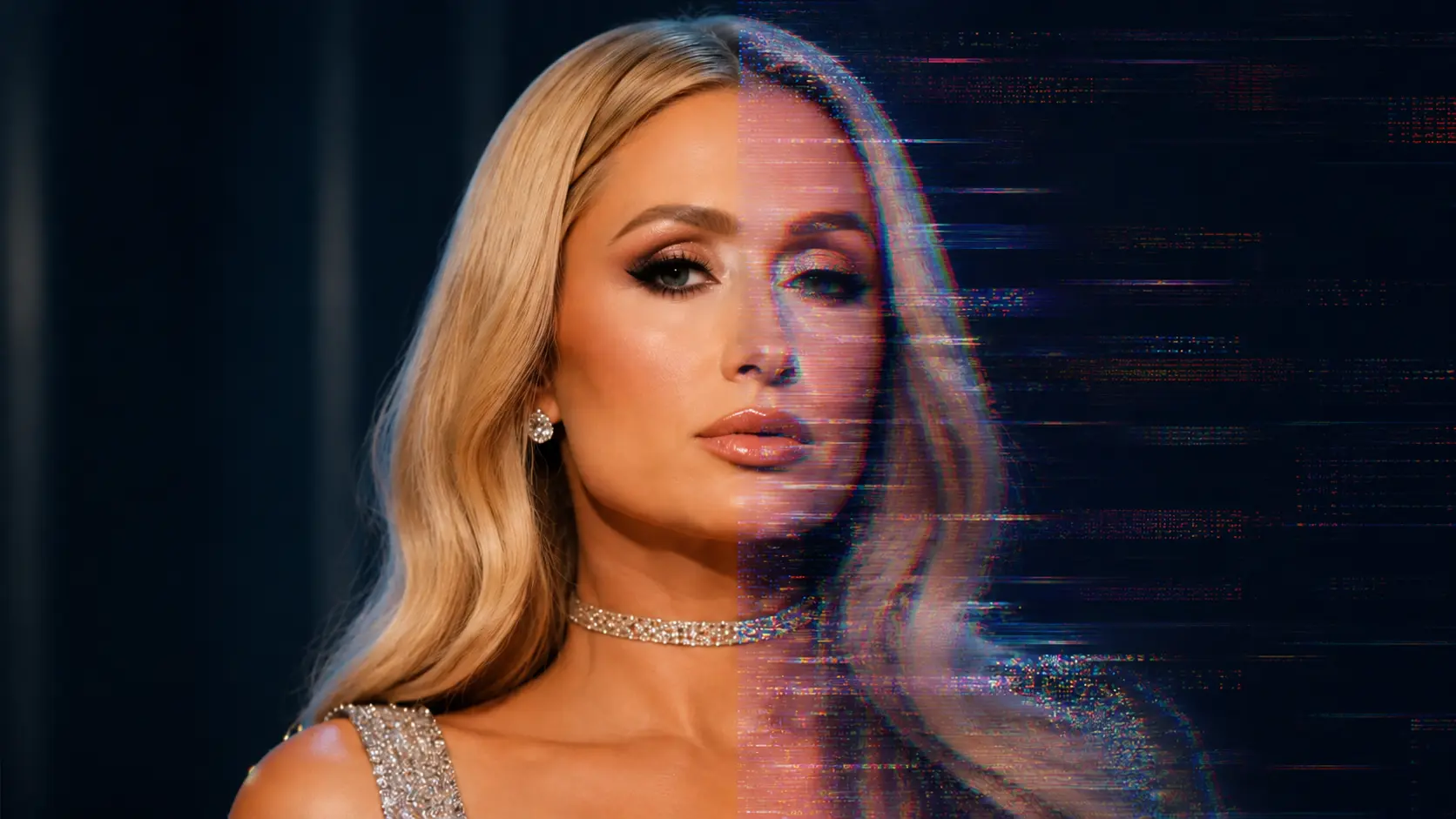
The businesswoman told the United States Congress that more than 100,000 explicit AI-generated images of her exist, none real and none consensual. Her testimony put a face to a threat that no longer spares celebrities, executives, or ordinary people.
 Written by
Media Removal
Reading time
1 min
Published
Written by
Media Removal
Reading time
1 min
Published
Summarize this post with:


For decades, a reputation crisis followed a predictable script: someone made a mistake, a complaint surfaced, a journalist investigated, and the affected person responded. In 2026, that script has been blown apart.
Today, the gravest threat to a person’s image can be content that never happened: a video, a photo, or an audio fabricated by artificial intelligence that looks completely real. And few cases illustrate it as starkly as that of Paris Hilton.
“More than 100,000 explicit images”: Paris Hilton’s testimony
The businesswoman and media personality revealed a figure before the United States Congress that is hard to take in: more than 100,000 explicit images of her, generated by artificial intelligence, none real and none consensual.
In her remarks to lawmakers, she summed up the horror in a sentence as brief as it was devastating: “Not one of them is real, not one of them is consensual.”
Hilton spoke from a unique position. In the early 2000s she was already a victim of the non-consensual release of an intimate video when she was 19, an episode that followed her for years.
She believed the worst was behind her, until she realized that AI had opened a new and more terrifying version of the same abuse: before, someone had to betray your trust and steal something real; now all it takes is a computer and a stranger’s imagination.
The key difference she herself underlines is disturbing. That video, at least, recorded something that happened. The images today are complete fabrications, yet the harm is identical, the violation just as deep, and the spread even faster, because these tools generate high-quality fakes in seconds.
From victim to investigator: the documentary that exposed the network
Hilton has not limited herself to speaking out. Together with journalist Laurie Segall, she launched a 14-part investigative docuseries on May 27 titled “Searching for Mr. Deepfakes,” available on her TikTok channel.
The series is the result of a three-year investigation to identify the anonymous operator of MrDeepFakes.com, a platform that hosted more than 70,000 non-consensual AI-generated videos before shutting down in May 2025 and that, over seven years, accumulated an estimated 2.2 billion views.
A joint investigation by several international outlets identified the site’s alleged operator: a 36-year-old pharmacist. The case, anonymous for years, no longer is, and with it came an exposure of the industrial scale this business has reached.
It is not just a celebrity problem
It is tempting to read these cases as Hollywood dramas with no bearing on real life. That would be a mistake. What happens to celebrities is only the early warning of a far larger problem, one that already reaches companies, executives, and private citizens.
The examples keep multiplying:
- In New York, a model sued the clothing retailer Rainbow USA, alleging it used an AI-generated version of her likeness in advertising campaigns without her permission.
- In India, several Bollywood actors, among them Varun Dhawan, have joined a legal movement seeking judicial protection for “personality rights” and their digital profile, amid a surge of content using their likeness without authorization.
The pattern is always the same: a person’s image (their face, their voice, their identity) becomes raw material to manufacture content that damages their reputation, their business, or their dignity.
The law is trying to catch up with the technology
Faced with this wave, lawmakers are moving, though more slowly than the technology. In the United States, two laws frame the landscape:
- The TAKE IT DOWN Act, signed in May 2025 as the first federal law to limit harmful uses of AI, requires platforms to remove unauthorized intimate images and deepfakes once they are notified. Its entry into force was set for May 2026.
- The DEFIANCE Act, driven on a bipartisan basis, would give victims the right to sue creators and distributors of non-consensual deepfakes for a minimum of $150,000 per violation. The Senate passed it unanimously on January 13, 2026, but by late May it was still stalled in the House of Representatives, with no floor vote scheduled.
It is precisely this gap, between what the law allows and what reality demands, that leaves so many victims in no-man’s-land.
Why deepfakes are the ultimate reputation risk
The reason experts place deepfakes at the top of the threat list is simple and, at the same time, chilling: they attack the line between true and false.
Until now, defending a reputation meant disproving facts. Faced with a deepfake, the affected person has to prove that something that looks obvious, because you can see it and hear it, simply never existed. And while they prove it, the content has already been seen, saved, and shared thousands of times.
At Media Removal we know this kind of case closely, and we know that the difference between a passing crisis and a permanent wound almost always comes down to the speed with which you act.
Winning a lawsuit does not erase the images: a court ruling brings justice, but it does not, on its own, deindex the files that have already been copied and shared across dozens of servers.
That is why, faced with a deepfake, what matters is combining prevention and reaction: reinforcing a strong, verified digital footprint before the blow and, afterward, documenting every appearance, demanding its removal, and making the material stop appearing in search engines, which is where the damage becomes part of daily life. Waiting for the law to protect us is not a strategy: real image protection starts the same day, not when the verdict arrives.
Sources
This reporting is based on:
- Paris Hilton’s public testimony before the United States Congress, in which she revealed the existence of more than 100,000 explicit AI-generated images of herself: WION.
- The international journalistic investigation into the MrDeepFakes platform and the docuseries “Searching for Mr. Deepfakes,” which traced and identified the site’s alleged operator.
 Subscribe to our newsletter
Reputation insights and industry news from the Media Removal team, straight to your inbox. No spam, unsubscribe anytime.
