

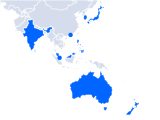
 Country guide · Asia-Pacific

This guide is general information about the law in India, checked against the sources listed below on November 1, 2026. It is not legal advice. Laws change and every case is different: for advice on your situation, speak to a qualified lawyer in India.
01Defamation law in India
Where the law comes from
The Constitution allows the state to place reasonable limits on free speech in relation to defamation. Civil liability for defamation comes from the law of torts, which the Supreme Court has treated as one of the laws protected by that clause. The criminal offence is defined in section 356 of the Bharatiya Nyaya Sanhita, 2023 (BNS), which replaced the Indian Penal Code from 1 July 2024.
Sources1Constitution of India, Article 19(2)2R. Rajagopal v State of Tamil Nadu (1994) 6 SCC 632, para. 213Bharatiya Nyaya Sanhita, 2023 (No. 45 of 2023), ss. 356 and 3584Ministry of Home Affairs notification S.O. 850(E) (BNS in force from 1 July 2024)
Is defamation a crime?
Defamation is a crime under section 356 of the BNS, punishable by simple imprisonment of up to two years, a fine, both, or community service. Knowingly printing, engraving or selling defamatory material can bring up to two years of simple imprisonment, a fine, or both. As a rule, a court can act only on a complaint from the person harmed (a public prosecutor can file for certain senior officials over their official conduct), and the time limit for the complaint is generally three years.
Sources3Bharatiya Nyaya Sanhita, 2023, s. 356(2)-(4)5Bharatiya Nagarik Suraksha Sanhita, 2023, ss. 222 and 514(2)(c)6Subramanian Swamy v Union of India (2016), para. 199
Statute of limitations
A civil claim for libel must be filed within one year of publication. A slander claim must be filed within one year of the words being spoken. If the words can be sued on only with proof of special damage, the year runs from when that damage results.
Defamation per se
The Limitation Act recognises that some spoken words are not actionable on their own and can be sued on only if they cause special damage. For that kind of slander, the one-year limit starts when the damage results rather than when the words were spoken.
Defenses and public figures
Section 356 of the BNS lists ten exceptions. They include true statements made for the public good, good-faith opinion on public servants and public questions, substantially true reports of court proceedings, good-faith opinion on works offered to the public, and good-faith statements made to protect someone's interests. In civil cases, the Supreme Court has held that public officials cannot recover damages over their official conduct unless they show reckless disregard for the truth; a media defendant that reasonably verified the facts is protected, but a false publication made out of malice is not. Government bodies cannot bring a civil claim for damages for defamation.
Sources3Bharatiya Nyaya Sanhita, 2023, s. 356(1), Exceptions 1-102R. Rajagopal v State of Tamil Nadu (1994) 6 SCC 632, para. 26
02Online harassment, cyberstalking and doxxing in India
Cyberstalking
Under section 78 of the BNS, a man commits stalking if he monitors a woman's use of the internet, email or other electronic communication, or repeatedly tries to contact her despite a clear sign that she is not interested. A first conviction can bring up to three years in prison and a fine. A repeat conviction can bring up to five years and a fine.
Online harassment
Threatening harm to someone's person, reputation or property to cause alarm is criminal intimidation under section 351 of the BNS, punishable by up to two years, a fine, or both. Making the threat anonymously, or hiding who is behind it, can add up to two more years. Section 79 also punishes words, sounds, gestures or objects meant to insult a woman's modesty, or intrusion on her privacy. The former offence of sending 'offensive' online messages (section 66A of the IT Act) was struck down by the Supreme Court in 2015 and is no longer valid law.
Sources3Bharatiya Nyaya Sanhita, 2023, ss. 79 and 3518Shreya Singhal v Union of India (2015), para. 119
Intimate images shared without consent
Capturing, publishing or sending an image of a person's private area without consent, in circumstances that violate their privacy, is an offence under section 66E of the IT Act, punishable by up to three years in prison, a fine of up to two lakh rupees, or both. Section 77 of the BNS also covers sharing images of a woman in a private act, even if she agreed to the image being taken but not to it being shared. Since 20 February 2026, platforms must take reasonable steps to remove such content, including morphed images, within two hours of a complaint from the person shown or someone acting for them.
Sources9Information Technology Act, 2000, s. 66E3Bharatiya Nyaya Sanhita, 2023, s. 7710IT (Intermediary Guidelines and Digital Media Ethics Code) Amendment Rules, 2026, G.S.R. 120(E) (in force 20 February 2026)11IT (Intermediary Guidelines and Digital Media Ethics Code) Rules, 2021, r. 3(2)(b) (MeitY text updated as on 10.02.2026)
03Data protection and the right to have content removed
The Digital Personal Data Protection Act, 2023 gives people the right to have personal data they consented to share corrected or erased, and an organisation must erase it on request unless it still needs it for the original purpose or a law requires it to keep it. The Act does not cover data a person made public themselves, or data published under a legal duty. Under a notification dated 13 November 2025, these rights take effect 18 months later, which points to May 2027.
Sources12Digital Personal Data Protection Act, 2023 (No. 22 of 2023), ss. 3(c) and 1213MeitY notification G.S.R. 843(E), 13 November 2025 (commencement of the DPDP Act)
04How to remove defamatory content in India
How to remove defamatory content in India
A lawsuit is one route, but it is slow, costly and public. Much harmful content can come down sooner through the platform’s own reporting process, a legal notice to the site owner or host, or a removal request to search engines. The right route depends on where the content lives and on the law that applies to it.
Media Removal reviews each case and recommends the fastest route that fits it. Removal always depends on each platform and, where relevant, the courts.
05Frequently asked questions about defamation in India
Is defamation a criminal offence in India?
Yes. Section 356 of the Bharatiya Nyaya Sanhita, 2023 makes defamation punishable by up to two years of simple imprisonment, a fine, both, or community service. As a rule, a court can act only on a complaint from the person harmed, though a public prosecutor can file for certain senior officials over their official conduct.
How long do you have to sue for defamation in India?
A civil claim generally has to be filed within one year. For libel, the year runs from publication. For slander, it runs from when the words were spoken, or from when special damage results if the words can be sued on only with proof of damage.
Is truth a defense to defamation in India?
Under the criminal law, truth is a defense only if the statement was also made for the public good, and whether it was is a question of fact. The law also protects good-faith opinion on public servants, public questions and decided court cases, among other exceptions.
Can a public official sue for defamation in India?
Yes, but under the Supreme Court's ruling in R. Rajagopal, an official seeking damages over their official conduct must show the publisher acted with reckless disregard for the truth. Government bodies themselves cannot bring a civil claim for damages for defamation.
How do I get intimate images of me removed from a platform in India?
Under the IT Rules as amended in 2026, a platform must take reasonable steps to remove content showing your private areas, nudity or sexual acts, or morphed images of you, within two hours of your complaint. Sharing such images without consent can also be a crime under section 66E of the IT Act and, where the person shown is a woman, under section 77 of the BNS.
06Defamation laws in nearby countries






07Sources
- Constitution of India, Article 19(2)
- R. Rajagopal v State of Tamil Nadu (1994) 6 SCC 632, para. 21
- Bharatiya Nyaya Sanhita, 2023 (No. 45 of 2023), ss. 356 and 358
- Ministry of Home Affairs notification S.O. 850(E) (BNS in force from 1 July 2024)
- Bharatiya Nagarik Suraksha Sanhita, 2023, ss. 222 and 514(2)(c)
- Subramanian Swamy v Union of India (2016), para. 199
- Limitation Act, 1963, Schedule, Articles 75 and 76
- Shreya Singhal v Union of India (2015), para. 119
- Information Technology Act, 2000, s. 66E
- IT (Intermediary Guidelines and Digital Media Ethics Code) Amendment Rules, 2026, G.S.R. 120(E) (in force 20 February 2026)
- IT (Intermediary Guidelines and Digital Media Ethics Code) Rules, 2021, r. 3(2)(b) (MeitY text updated as on 10.02.2026)
- Digital Personal Data Protection Act, 2023 (No. 22 of 2023), ss. 3(c) and 12
- MeitY notification G.S.R. 843(E), 13 November 2025 (commencement of the DPDP Act)